%20(1)_edited.png)
The Sinks Canyon Ecosystem
Sinks Canyon is part of a magnificent ecosystem that stretches from the sagebrush and juniper covered foothills, through conifer forests, aspen meadows, to alpine habitat at timberland. An amazing diversity of wildlife can be seen in this area, as well as world class geology, and a dazzling variety of wildflowers and other plants.
The Many Habitats of the Canyon
In a few yards in the Canyon you can go from a dry sagebrush-bitterbrush slope to a wet, lush riparian zone, then into dense stands of conifer trees.
The many habitats support a rich diversity of life. Mammals from large predators like Mountain Lions to tiny Meadow Voles live in the canyon. Hummingbirds to Golden Eagles can be seen, and the plant life creates a rich ecosystem.
Microhabitats abound, from aspen groves and cottonwood stands to bogs and sheer rock faces.


Conifers
The north-facing slope stays shaded much of the winter, allowing snow to build up and provide the moisture these dense conifer stands need. Trees here are primarily Douglas fir and limber pine. Douglas fir can be identified by its cones, with sharp, three-pointed bracts, and “bottle-brush” needles. Limber pine has needles in bundles of five, and its seeds are a key food source for many animals.
In the past decade, both species have been heavily impacted by pine bark beetles—tiny insects that, in large numbers, can kill trees. Across the West, these outbreaks have devastated forests.
Riparian
The Popo Agie River supports a vital riparian ecosystem. These riverside areas have a high water table, allowing lush plant growth that attracts a wide variety of animals. Riparian zones provide food, cover, and travel corridors, while also stabilizing stream flow, filtering sediment, and reducing flood impacts. In Wyoming, they make up only a small portion of the landscape, yet most wildlife depends on these healthy, clean habitats.

Aspen Groves
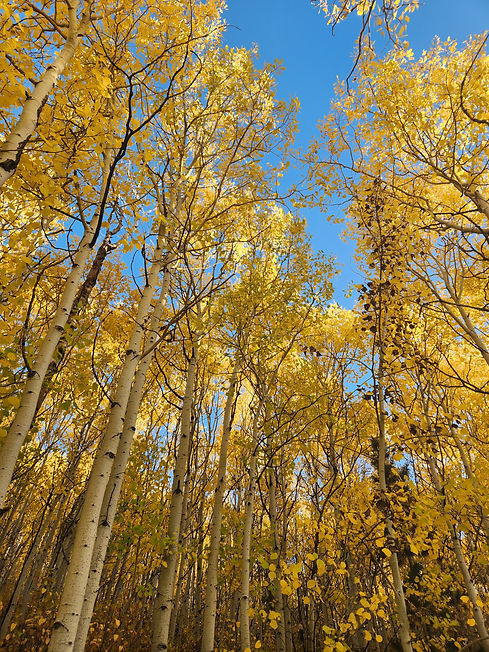
Aspens grow from about 5,600 feet to timberline, often in riparian areas or places with deep winter snow. Their heart-shaped leaves flutter in the slightest breeze, creating a shimmering effect. Aspens are early colonizers after disturbance and often reproduce by sending up shoots from a shared root system. An entire grove may be one organism.
Aspens can live over 200 years. Dark scars on their trunks mark age and injury. These groves support diverse wildlife: broad-tailed hummingbirds feed on nearby flowers, red-naped sapsuckers drill for sap, many birds nest in the canopy, and porcupines and beavers rely on aspen bark and wood for food and shelter.
Sagebrush Steppe
The south-facing slope receives abundant sun year-round. In winter, sunlight reflecting off the cliffs melts snow before it can soak into the ground, creating dry conditions that limit plant growth.
Drought-adapted plants like sagebrush and juniper thrive here. Big sagebrush, an aromatic silver-gray shrub, is especially important as it stays above the snow and provides critical winter food for mule deer. Bitterbrush, with its small three-pronged leaves, is another key food source.
Because it remains relatively snow-free, this slope is important winter habitat for wildlife.
Sagebrush habitat may look dry and empty, but it teems with life and is one of the richest and most diverse ecosystems in the west.


Alpine Headwaters
Above Sinks Canyon, alpine habitats stretch into the high Wind River Mountains, where long winters, strong winds, and thin soils limit plant growth. These high-elevation zones feed the canyons below with snow melt to sustain the river though out the summer.
Alpine areas are dominated by low-growing grasses, wildflowers, and hardy shrubs adapted to short growing seasons. Though they may appear sparse, they support specialized wildlife and play a critical role in storing and releasing water. The steady snowmelt from these alpine zones sustains the river, shaping the rich ecosystems found throughout Sinks Canyon.